
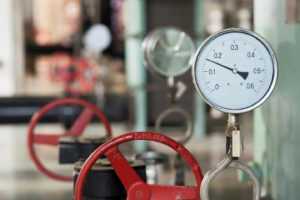
What is Calibration ?
Formally, calibration is the documented comparison of the measurement device to be calibrated against a traceable reference device.
Our Commitment!
To meet the requirements of ISO/IATF certification Standards, manufacturers must calibrate all measuring and test equipments that affects product quality.
This seems to be critical process for many manufacturing companies. But don’t worry just contact us and let us handle it for you.
We at Nityaa Associates, are committed to provide you dedicated, accurate, cost effective and on time services always!
We, at Nityaa Associates are committed to cater Calibration Services in following Disciplines:-
- Mechanical (Pressure & Vacuum)
- Electro-Technical (Temperature, Voltage, Current Simulation)
- Thermal (Temperature Measurement)
At a glance, Nityaa Associates Serves Calibration Activities upto the extent, but not limited to:-
- Pressure (0 to 700 bar)
- Vacuum (-0.8 to 0 bar)
- Temperature (mV/ Ohm) Measurement (-30°C to 1200°C)
- Temperature (mV/ Ohm) Simulation (-200 to 1300°C)
- Time (upto 1 Hour).
Nityaa Associates also undertakes Calibration Activities in the fields of Gas Flow, Acoustics, Humidity, Speed, pH, Conductivity, TDS, etc.
Why should you calibrate?
At this point, you may wonder why should you calibrate something, or what are the reasons for calibrating?
In industrial process conditions, there are various reason for calibration. Examples of the most common reasons are:
- Accuracy of all measurements deteriorates over time
- Regulatory compliance stipulates regular calibration
- Quality System requires calibration
- Money – money transfer depends on the measurement result
- Quality of the products produced
- Safety – of customers and employees
- Environmental reasons
- Various other reasons
How often you should calibrate?
Is there any rule of Thumb? What frequency should be followed? How often should instruments be calibrated?
There is no one correct answer to this question, as it depends on many factors. Some of the things you should consider when setting the calibration interval are, but not limited to:
- Criticality of the measurement in question
- Manufacturer’s recommendation
- Stability history of the instrument
- Regulatory requirements and quality systems
- Consequences and costs of a failed calibration
- Other considerations
Adjustment
When you make a calibration and compare two devices, you may find out there is some difference between the two. So, it is pretty logical that you may want to adjust the device under test to measure correctly. This process is often called adjustment or trimming.
Formally, calibration does not include adjustment, but is a separate process. In everyday language the word calibration sometimes also includes possible adjustment. But as mentioned, the adjustment is a separate process according to most formal sources.
Tolerance limit, Out of tolerance, Pass/Fail
Most often when you calibrate an instrument, there is a tolerance limit (acceptance limit) set in advance for the calibration. This is the maximum permitted error for the calibration. If the error (difference between DUT and reference) at any calibrated point is larger than the tolerance limit, the calibration will be considered as “failed.”
In the case of a failed calibration, you should take corrective actions to make the calibration pass. Typically, you will adjust the DUT until it is accurate enough.
Calibration certificate
The definition of calibration includes the word “documented.” This means that the calibration comparison must be recorded. This document is typically called a Calibration Certificate.
A calibration certificate includes the result of the comparison and all other relevant information of the calibration, such as equipment used, environmental conditions, signatories, date of calibration, certificate number, uncertainty of the calibration, etc.
Traceability
It was mentioned that the reference standard that is used in calibration must be traceable. This traceability means that the reference standard must have also been calibrated using an even higher-level standard. The traceability should be an unbroken chain of calibrations, so that the highest-level calibration has been done in a National calibration center, or equivalent.
So, for example, you may calibrate your process measurement instrument with a portable process calibrator. The portable process calibrator you used, should have been calibrated using a more accurate reference calibrator. The reference calibrator should be calibrated with an even higher-level standard or sent out to an accredited or national calibration center for calibration.
The national calibration centers will make sure that the traceability in that country is at the proper level, using the International Calibration Laboratories or International comparisons.
If the traceability chain is broken at any point, any measurement below that cannot be considered reliable.
Calibration uncertainty, measurement uncertainty
When you calibrate an instrument with the higher-level device, the process always includes some uncertainty. Uncertainty means the amount of “doubt” in the calibration process, so it tells how “good” the calibration process was. Uncertainty can be caused by various sources, such as the device under test, the reference standard, calibration method or environmental conditions.
In the worst case, if the uncertainty of the calibration process is larger than the accuracy or tolerance level of the device under calibration, then calibration does not make much sense.
The aim is that the total uncertainty of calibration should be small enough compared to the tolerance limit of the device under calibration. The total uncertainty of the calibration should always be documented in the calibration certificate.